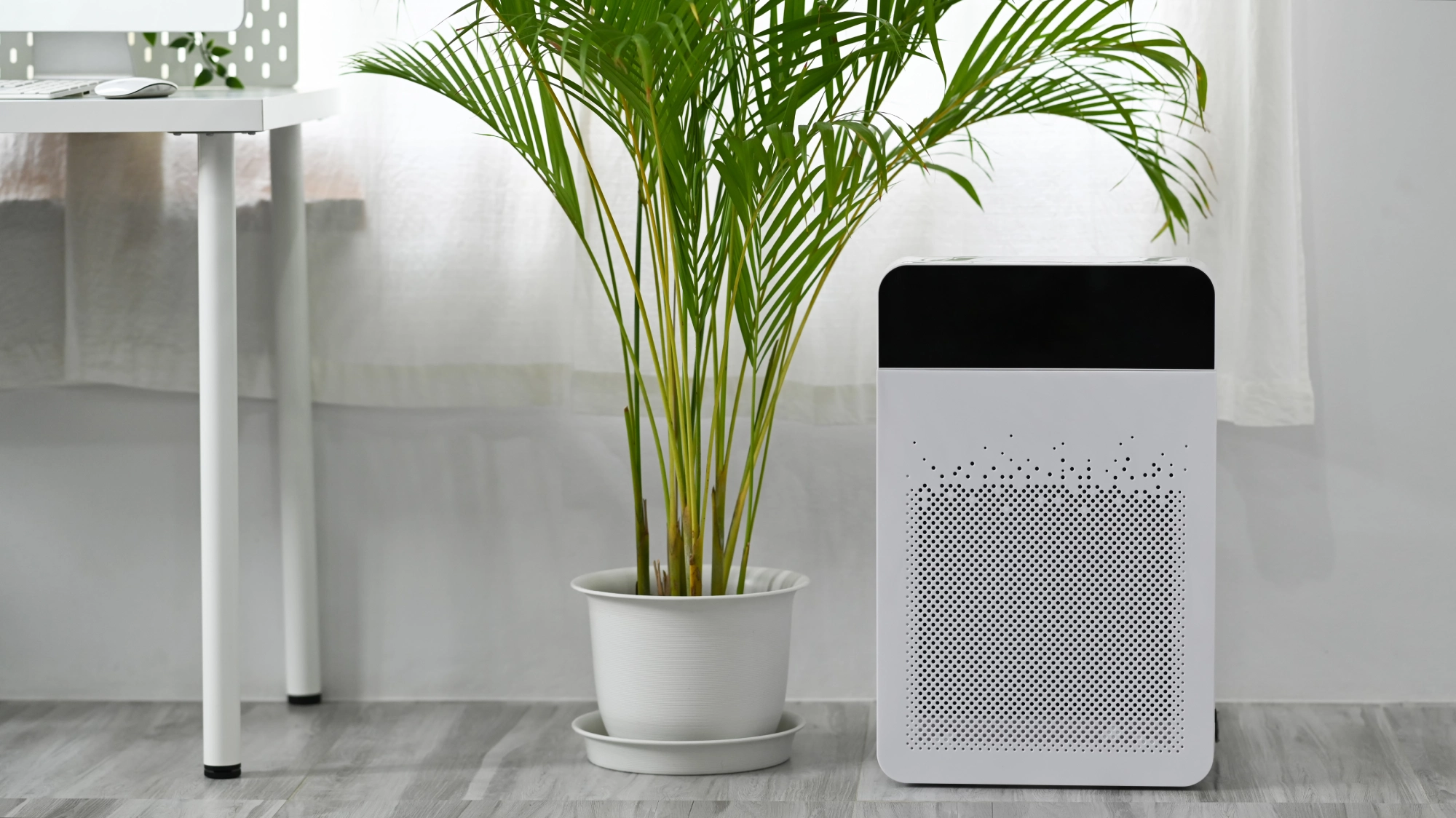
Whole-House Dehumidifiers: Do You Really Need One in Southwest Florida?
For most Southwest Florida homeowners, a whole-house dehumidifier is not optional equipment. Florida’s outdoor humidity regularly exceeds 90 percent, and standard air conditioning alone often can’t maintain indoor relative humidity below the 60 percent threshold where mold grows and air quality degrades. A whole-house dehumidifier connected to your HVAC system solves that problem automatically, protecting both the home’s structure and the health of everyone inside. This article covers how dehumidifiers protect your home, how they compare to portable units, and what installation involves.
How a Whole-House Dehumidifier Protects Your Home From Mold, Mildew, and Humidity Damage
A whole-house dehumidifier extracts excess moisture from the air before it can promote mold growth, warp wood, damage drywall, or degrade indoor air quality. By maintaining indoor relative humidity between 45 and 55 percent year-round, the system prevents the conditions that mold, dust mites, and structural moisture damage require to develop.
Mold doesn’t need much to get started in Florida. A surface with moisture, organic material, and relative humidity above 60 percent is all it takes. Inside a home, those conditions exist most often in wall cavities near plumbing, behind refrigerators, under bathroom tiles, and inside HVAC systems with inadequate drainage. Once established, mold colonies release spores that circulate through the air conditioning system and reach every room in the house.
Wood framing, subflooring, cabinetry, and trim all absorb moisture from the air when indoor humidity stays chronically elevated. Over time, that absorption causes warping, swelling, and in severe cases structural damage that’s expensive to repair. Maintaining proper indoor humidity isn’t just a comfort issue; it’s a long-term home preservation strategy.
- Indoor humidity above 60 percent supports mold growth, dust mite populations, and air quality problems
- Whole-house dehumidifiers operate independently from the AC system, addressing humidity any time the sensor triggers
- Protecting wood structures, flooring, and cabinetry from moisture damage is a long-term financial benefit
- Mold remediation in a Florida home typically costs thousands of dollars; prevention costs a fraction of that
- J&D installs whole-house dehumidifiers from Aprilaire and other leading brands with professional setup and calibration
Standard air conditioning does reduce humidity as a byproduct of cooling, but it only runs when the thermostat calls for cooling. During mild Florida evenings in spring and fall, when temperatures are comfortable but humidity is still high, the AC doesn’t run, and indoor humidity can climb. A whole-house dehumidifier operates independently of the cooling cycle, addressing humidity whenever the sensor detects moisture above the set threshold.
| Feature | Portable Dehumidifier | Whole-House Dehumidifier |
| Coverage area | One room only | Entire home |
| Drainage | Manual reservoir emptying | Automatic condensate drain |
| Humidity control | Manual setting, no sensor feedback | Automatic via calibrated sensor |
| Energy efficiency | Lower (per pint removed) | Higher (processes large air volume) |
| Maintenance | Frequent (filter + reservoir) | Annual check only |
| Installation required | No | Yes (professional HVAC connection) |
Portable Dehumidifier vs. Whole-House System: What Works Best for Florida Homeowners?
A portable dehumidifier treats one room or area effectively but requires manual emptying of a water reservoir, can’t maintain consistent humidity throughout a multi-room home, and uses more energy per pint of moisture removed than a whole-house system. For a Florida home with ongoing humidity concerns, a whole-house dehumidifier connected to the HVAC system is the more effective and lower-maintenance solution.
Portable dehumidifiers make sense in specific, limited situations: a single-room mold problem in a storage area, a temporary solution during HVAC maintenance, or a rental property where a permanent installation isn’t practical. For the primary living space of a Southwest Florida home, the limitations show up quickly. The reservoir fills fast in Florida’s humidity, the unit only treats the air around it, and moving it between rooms doesn’t solve the underlying moisture management problem.
A whole-home dehumidifier connects to the return air side of the HVAC system and processes the same air stream that flows through the entire house. Moisture extracted by the unit drains automatically through a condensate line, so there’s no reservoir to empty. The system runs quietly in the background and adjusts output based on the humidity sensor reading, not on a timer or a manual setting.
Energy consumption is another consideration worth taking seriously in Florida where utility bills are already elevated by year-round cooling. Whole-house dehumidifiers are significantly more efficient per pint of moisture removed than portable units, because they process a high volume of air in a single pass rather than cycling the same room air repeatedly through a small unit.
What to Expect From Whole-House Dehumidifier Installation, Costs, and Performance
Whole-house dehumidifier installation by a licensed HVAC contractor typically involves connecting the unit to the return air duct, running a condensate drain line, and wiring the unit to the HVAC control system. Most residential installations are completed in a half-day, and the system is calibrated to maintain a target humidity level before the technician leaves.
The cost of a whole-home dehumidifier system in Southwest Florida, including equipment and professional installation, generally falls in the $1,500 to $3,000 range depending on the unit’s capacity and the complexity of the duct connection. Larger homes or homes with multiple HVAC systems require higher-capacity units. J&D provides free estimates and ensures the unit is appropriately sized for the home’s square footage and typical outdoor humidity levels.
Performance expectations depend on how well the rest of the home’s envelope is sealed. A whole-house dehumidifier works against everything that brings outdoor humidity inside: gaps around doors and windows, attic air infiltration, and crawl space moisture rising through the floor system. Pairing the dehumidifier with a home weatherization assessment gives the best results.
Once installed, the system requires minimal maintenance: an annual filter check and cleaning, a condensate drain flush to prevent blockage, and a periodic inspection of the humidity sensor’s calibration. J&D’s maintenance agreement customers receive these checks as part of their regular HVAC service visits, keeping the system running at full effectiveness without requiring homeowners to track the service intervals themselves.
Frequently Asked Questions
What indoor humidity level should I maintain in my Southwest Florida home?
The target range for indoor relative humidity in a Florida home is 45 to 55 percent. At that level, mold growth is inhibited, dust mite populations are reduced, wood structures and furnishings are protected from moisture damage, and occupants typically feel more comfortable at slightly higher thermostat settings because dry air feels cooler. A calibrated humidity sensor connected to a whole-house dehumidifier maintains that range automatically without requiring manual adjustment.
Will a whole-house dehumidifier increase my electric bill significantly?
Modern whole-house dehumidifiers are substantially more energy-efficient than portable units, but they do add to energy consumption. The offset comes from two sources: first, drier air allows the thermostat to be set a degree or two higher while maintaining the same comfort level, reducing AC runtime; second, the HVAC system runs more efficiently when it isn’t fighting persistent moisture load. Most Southwest Florida homeowners find that the energy cost of the dehumidifier is partially or fully offset by the reduction in AC runtime.
Can a whole-house dehumidifier help if I already have mold in my home?
A dehumidifier prevents mold from growing by removing the moisture mold requires, but it doesn’t kill existing mold colonies. If mold is already present, professional remediation to remove the affected materials should happen before the dehumidifier is installed. Leaving existing mold in place and installing a dehumidifier doesn’t resolve the problem; it just slows further spread. J&D can assess whether existing HVAC ductwork shows signs of mold during a service visit and recommend next steps.
How large a dehumidifier do I need for my Southwest Florida home?
Whole-house dehumidifier capacity is rated in pints of moisture removed per day. A properly sized unit depends on the home’s square footage, ceiling height, construction quality, and how much outdoor air infiltrates the envelope. Most single-story homes between 1,500 and 3,000 square feet in Southwest Florida are well-served by units rated between 70 and 135 pints per day. J&D sizes the unit correctly during the estimate visit rather than defaulting to a generic recommendation.
Does a whole-house dehumidifier work alongside the existing AC system?
Yes, and it’s designed to. A whole-house dehumidifier connects to the HVAC return duct and runs independently of the cooling system. When the AC is running and removing humidity through normal condensation, the dehumidifier monitors conditions and adjusts or shuts off as needed. During periods when the AC isn’t running but humidity is elevated, the dehumidifier activates on its own. The two systems complement each other rather than interfering, giving the home consistent humidity control across all seasons and conditions.