Ductless Mini Split Systems: The Complete Guide for Homeowners
Overview of Ductless Mini Split Systems
A ductless mini split system delivers conditioned air directly into specific rooms without requiring ductwork. It provides an efficient cooling and heating solution for additions, converted garages, older homes, and spaces where extending a central AC system is impractical.
An outdoor compressor connects to one or more indoor units through a small refrigerant line running through a single three-inch hole in an exterior wall.
Mini Split vs. Central Air vs. Window Units
| Feature | Ductless Mini Split | Central Air (Ducted) | Window AC Unit |
|---|---|---|---|
| Ductless Space Installation | Easy (small line set only) | Expensive (requires new ductwork) | Easy (mounts in window) |
| Zone Control | Yes (room-by-room) | No (whole home on one thermostat) | Yes (individual room only) |
| Heating Capability | Yes (built-in heat pump) | Requires separate furnace or heat strip | No (typically cooling only) |
| Energy Efficiency (SEER2) | High (18–25+) | Moderate to High (15–20) | Low (10–12) |
| Typical Lifespan | 15–20 years | 12–17 years | 8–12 years |
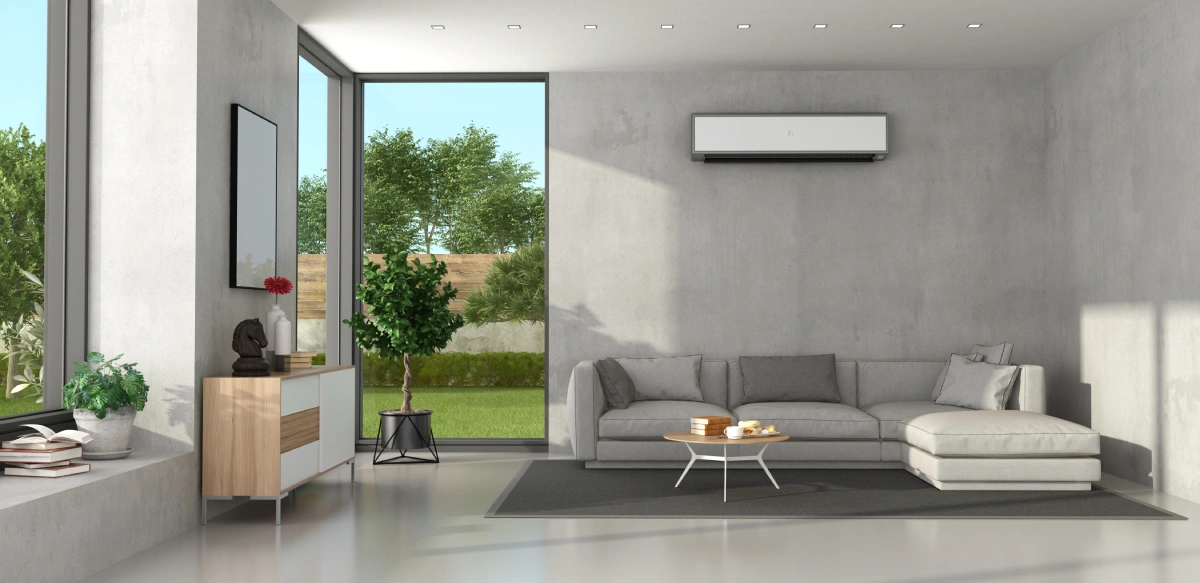
| Appearance | Wall-mounted indoor unit | Hidden vents | Blocked window view |
Key Benefits for Homeowners
1. Targeted Room-by-Room Zone Control
Unlike central systems that cool an entire home to a single set temperature, mini splits allow independent temperature adjustments for every room. Unused areas (like guest bedrooms) can remain at a higher temperature, significantly reducing overall energy usage.
2. High Energy Efficiency
Mini splits utilize inverter-driven compressors that continuously modulate output rather than turning on and off at full power. With SEER2 ratings reaching 18 to 25+, they operate far more efficiently than standard window units or traditional ducted systems.
3. All-in-One Heating and Cooling
Operating as a heat pump, a mini split provides effective cooling during hot months and efficient heating during cold snaps without requiring a separate furnace or heating system.
4. Quiet and Low-Profile Operation
Because the loud compressor component remains outside, indoor units run quietly by moving air gently across a direct-delivery coil—making them ideal for bedrooms, offices, and quiet living spaces.
Installation Process and Considerations
- Fast Setup: A standard single-zone installation takes approximately 4 to 6 hours and requires only a small exterior wall penetration for wiring and refrigerant lines.
- Multi-Zone Flexibility: Up to five indoor units can connect to a single outdoor compressor to heat and cool multiple rooms independently.
- Professional Licensing Required: EPA Section 608 certification is legally required to handle refrigerant lines, and electrical connections require a licensed contractor. DIY installation voids manufacturer warranties and can lead to safety hazards or code violations.
Frequently Asked Questions
Do mini splits perform well in high-humidity environments?
Yes. Mini splits pull moisture out of the air as warm indoor air passes over the cold evaporator coil. Proper sizing is critical: an oversized unit will cool the room too quickly without running long enough to remove ambient humidity, leading to a clammy environment.
What is the expected lifespan of a mini split?
With regular annual maintenance—including coil cleaning, drain line clearing, and electrical inspections—a quality ductless mini split system typically lasts 15 to 20 years.